
Alcohol Use Disorder(AUD) isn’t character failure. It’s a biological crisis. Plain and simple.
There’s a dangerous idea floating around—that quitting drink is just about making a choice. Families watching someone spiral always ask the same thing. “Why can’t they just quit?” The answer sits in neurobiology, not willpower. Years of heavy drinking hijack the brain’s reward system. The substance becomes as essential to perceived survival as food. As water. As breathing.
When does this dependency take care of ? “Cold turkey” isn’t just difficult. It’s dangerous.
That’s why Alcohol Rehabilitation Centers exist. These aren’t vacation retreats. They’re clinical environments designed to dismantle addiction safely. For families navigating this nightmare, understanding the difference between medical detox for alcohol addiction and long-term therapy separates temporary pause from permanent recovery.
Phase 1: The Physiology of Withdrawal (Medical Detox)
First hurdle in alcohol addiction treatment? Physical dependency.
When heavy drinkers suddenly stop, the central nervous system suppressed by alcohol for years rebounds violently. Doctors call this Acute Withdrawal. Attempting detox at home is genuinely risky. Research covering thousands of cases confirms this. Symptoms range from tremors and anxiety to life-threatening complications like Delirium Tremens. DTs can kill. This isn’t a scare tactic—it’s a medical fact.
That’s why medical detox for alcohol addiction is a non-negotiable first step.
At facilities like Sevok Prayas Foundation, the focus shifts from “willpower” to “medical stabilization.” Staff administer medications stabilizing brain chemistry. Vitals monitored around the clock. Benzodiazepines commonly used to prevent seizures—studies show they reduce withdrawal complications significantly.
The detox process typically runs 3 to 14 days depending on severity. How long someone drank. How much. What else is going on medically?
Note: Detox doesn’t cure addiction. It clears the fog so real work can begin. It keeps patients alive so they can learn how to live.
Phase 2: The "Why" – Beyond the Bottle
Why did drinking start in the first place? Rarely does someone destroy their liver for the taste of whiskey. They drink to numb something. Trauma. Anxiety. Depression. Undiagnosed mental health disorders that never got proper attention.
This is where Dual diagnosis alcohol rehab becomes critical.
If a center treats alcoholism but ignores underlying anxiety or trauma? Relapse becomes almost mathematically guaranteed. Research backs this up; patients with untreated co-occurring disorders have significantly higher relapse rates.
Sevok Prayas Foundation operates on this exact philosophy. Their approach integrates mental health and addiction treatment. The goal isn’t just making someone “dry.” It’s building psychological resilience that holds up when life gets hard again. Because life will get hard again.
Effective alcohol counseling and therapy involves digging into root causes:
- The anger nobody addressed.
- The loneliness that became unbearable.
- The exhaustion from pretending everything was fine.
Then building new coping mechanisms. Ones that don’t involve bottles.
Phase 3: The Holistic Architecture of Recovery
Recovery goes beyond therapy sessions. It’s about rebuilding a broken lifestyle. Sevok Prayas Foundation believes modern holistic alcohol recovery treats the whole person, not just the drinking behavior.
Alcohol depletes essential nutrients. Thiamine deficiency is common and serious. Sleep patterns get destroyed. Physical stamina disappears. The body needs repair alongside the mind.
An effective alcohol recovery treatment center creates what’s essentially a closed system of healing:
- Nutritional Repair: Restoring chemical balance the body lost. Vitamins. Proper meals. Hydration that’s been neglected for years.
- Structured Living: Breaking chaotic habits addiction created. Wake times. Meal times. Activity schedules. Structure rebuilds the predictability addiction destroyed.
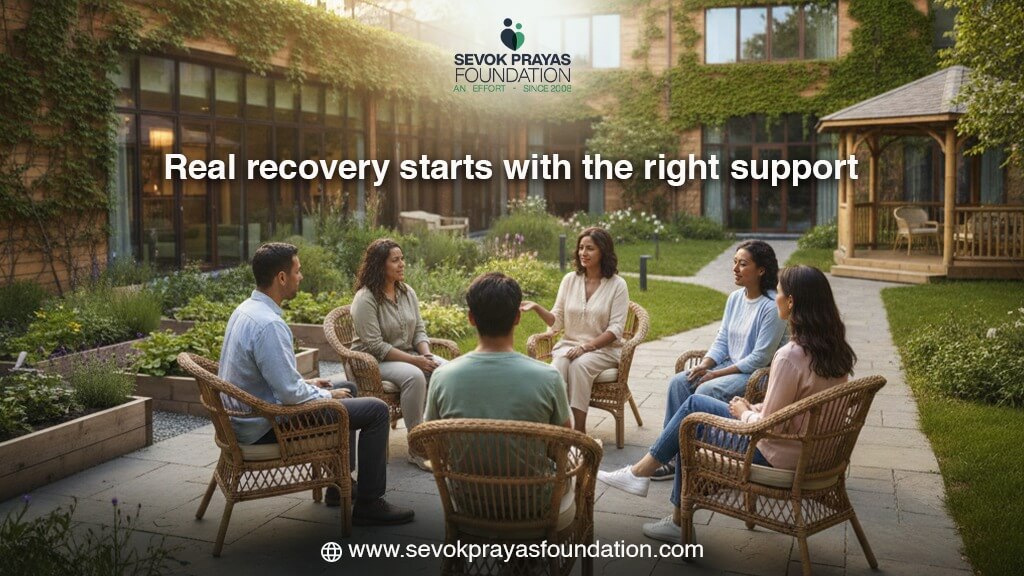
- Community Support: Realizing you’re not fighting alone. Other patients are walking the same path. Staff who’ve seen recovery happen.
Whether it’s an inpatient alcohol rehabilitation program for those needing 24/7 support, or an outpatient alcohol rehab program for those maintaining jobs and family duties—environment matters. It must feel like a sanctuary. Not punishment.
What Families Need to Know [FAQs]
Q1. Does rehab guarantee a cure?
Q2. How long should treatment last?
Q3. Is it expensive?
Q4. Can we force someone into rehab?
Conclusion
Alcoholism steals. Time. Health. Money. Relationships. Years that don’t come back. But it’s not a death sentence.
Recovery is possible. Requires surrender to the process though. Admitting that the way things have been going isn’t sustainable anymore. That the drinking that once felt like a solution has become the problem consuming everything.
You don’t have to navigate this alone. Resources exist. Sevok Prayas Foundation has established itself as a lifeline for those seeking alcohol abuse treatment that respects patient dignity while aggressively treating the disease.
Don’t wait for “the right time.” In addition, the right time was yesterday. The next best time is now.
Reach out to Sevok Prayas Foundation – recovery starts with one conversation.