
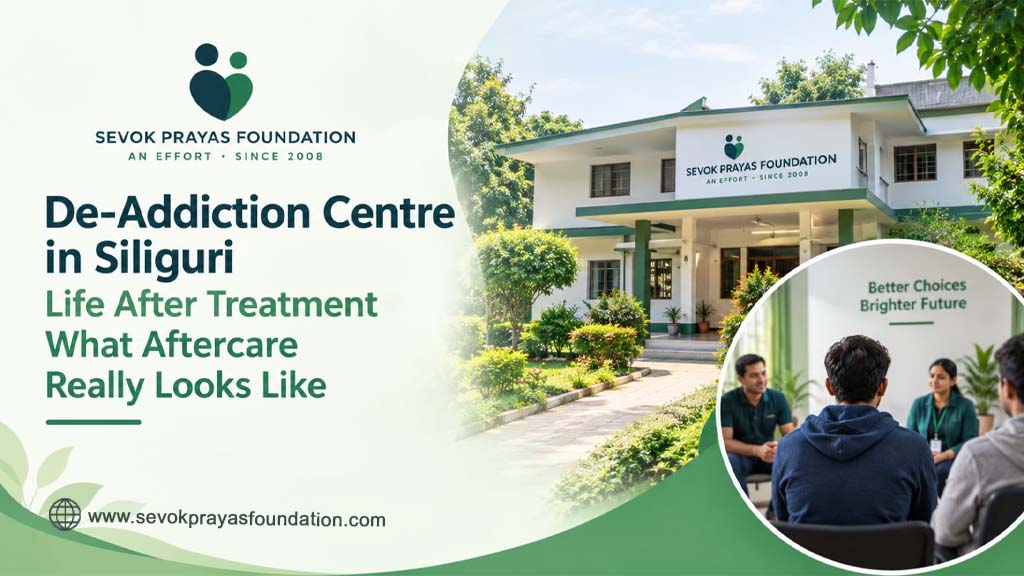
When you finish a treatment program it is a true accomplishment, but it is just the first step on a long road. Many people believe that what happens after the treatment is completed is the same as what happened during treatment, but in many cases, what comes after treatment is what leads to lasting change. We at Sevok Prayas (a trusted De-Addiction Centre, Siliguri) feel aftercare should be treated with the same level as care during treatment. An impassioned word on what life is like once treatment.
Why Aftercare Matters So Much
Recovering is not a one-time process – it’s a long journey that extends well after treatment is complete. People are at greater risk of relapsing without adequate aftercare support, especially in the first few months following treatment, when they are still adjusting to the “real world” – the place where people live, work and play. This is just one of the main reasons for taking aftercare planning seriously as a key element of the drug addiction treatment process – not something you can afford in Siliguri and most alcohol rehabilitation but an essential part of the recovery process.
What Aftercare Typically Includes
1. Continued Counseling and Therapy
Individual or family therapy sessions can be offered on an ongoing basis to help people continue working on feelings, circumstances, and other factors that fueled their use of substances in the first place. This ongoing guidance is available to help young people identify when they are faced with this type of difficulty in real life.
2. Support Group Participation
Relational networks within community and personal peer support can be hard to come by, but groups come with this benefit of a sense of uniformity and responsibility that is not found elsewhere. Reaching out to people who can relate to your recovery experience can be a source of ongoing and important encouragement.
3. Relapse Prevention Planning
An effective aftercare plan usually tells you more than just how to get involved in life and help avoid high-risk situations. It will explain how to identify when a hole is getting big, how to manage it and what to do if it is becoming difficult.
4. Family Involvement and Education
Recovering is not just one person, it’s a family matter. Genuine support within the family is fostered as the family is supported, communicated and educated through help throughout the recovery process.
5. Structured Daily Routines
Establishing a daily routine free of turbulence (work, healthful activities, sleep schedule) is an important part of the recovery process and influences a person’s long-term recovery state to prevent a period of unstructured time that may contribute to vulnerability to recovery.
6. Regular Check-Ins With Treatment Providers
Follow-up sessions with treatment providers or counselor professionals will occur on a regular basis to monitor and modify coping, and to provide early intervention if problems reoccur.
7. Addressing Co-Occurring Mental Health Needs
For a lot of people, drug use is tied up with underlying mental health problems such as anxiety, depression or a history of trauma that they have never been able to move on from. Giving attention to these co-occurring issues can help create an effective plan for aftercare – plans that treat substance dependence as part of a greater package.
Common Challenges During the Aftercare Period
They can do this by understanding the possible problems, which will help them to make more effective preparations:
- Going back to familiar places where there might be a cause, or pressure, for drinking, using drugs, or smoking again.
- Re-establishing connections that could have been damaged while drunk/using drugs.
- Stress and life responsibilities, without using the strategies they had in the past.
- Initiating social interactions around alcohol or drug use.
- Keeping the momentum going when things seem to be taking a little longer or are not as obvious.
Understanding these as a natural phase of recovery and not as an indication of failure, helps individuals deal with setbacks with acceptance as a stepping stone, instead of remaining discouraged.
How Families Can Support the Aftercare Process
The family group can be an important part of the long-term recovery process. Helpful approaches include:
- Familiarizing themselves with the facts about addiction and recovery.
- Providing non-judgemental and consistent support and encouragement.
- When available, engaging in family counseling.
- Identifying supportive involvement and enabling behaviours.
- Supporting ongoing access to aftercare, not taking for granted that’s the only component to treatment.
Sevok Prayas' Approach to Aftercare
At Sevok Prayas, we believe genuine recovery support doesn’t end when formal treatment concludes. Our approach to aftercare includes:
- Structured relapse prevention planning tailored to each individual.
- Ongoing counseling and check-in sessions following primary treatment.
- Family education and involvement throughout the recovery journey.
- Support connecting individuals with peer support communities.
- Continued attention to co-occurring mental health needs.
Frequently Asked Questions (FAQs)
Q1: How long does aftercare typically last after completing a treatment program?
Q2: Is relapse a sign that treatment failed?
Q3: How can family members support a loved one during the aftercare period without being overbearing?
Q4: Are support groups really necessary if someone has already completed structured treatment?
Q5: What should someone do if they notice early warning signs of relapse during aftercare?
Final Thoughts
The bulk of work towards recovery occurs outside the walls of the treatment center and rehabilitation efforts involve making it through the day, habits formed, relationships remended, and making progress amidst a lack of structured assistance from the treatment program. A full aftercare program, focused on ongoing counseling, peer support, family involvement, and relapse prevention can work miracles in the chances of a successful recovery. Our work at Sevok Prayas, as a dedicated De-Addiction Centre in Siliguri, is so much more than treatment; it’s about helping individuals and families navigate this continuous journey.