
Seventeen years have passed and that’s how long we’ve watched people walk through our doors at Sevok Prayas Foundation. And here’s what those years taught us—detox takes maybe two weeks. Figuring out why someone started using it? That takes real work.
We opened this rehabilitation centre in Siliguri back in 2008. Though medical detox was the hard part. Wrong. Watching too many people leave feeling great, show up again months later in worse shape. That pattern changed everything.
Why Therapy Matters More Than Most Realise
Addiction isn’t a weakness nor a bad character either.
Brain wiring actually changes—how stress feels, how rewards register, how decisions get made. Substances hijack dopamine pathways. Your prefrontal cortex gets compromised.
Think about why someone starts using. Work pressure becomes unbearable. Marriage falls apart. Old trauma keeps surfacing at odd moments. The drink or pill becomes the fastest escape from feelings that seem impossible.
Remove that escape without teaching anything better? Same problems sit there waiting. Same triggers. Nothing to manage them.
That’s why our de-addiction centre in Siliguri puts therapy first. Brief sobriety followed by relapse followed by shame—seen that cycle hundreds of times. Therapy breaks it.
Therapeutic Methods We Actually Use
At Sevok Prayas Foundation, therapy isn’t just a routine—it’s the heart of recovery. We use proven methods to help people understand themselves, manage triggers, and build healthier habits. Each approach is designed to support real, lasting change.
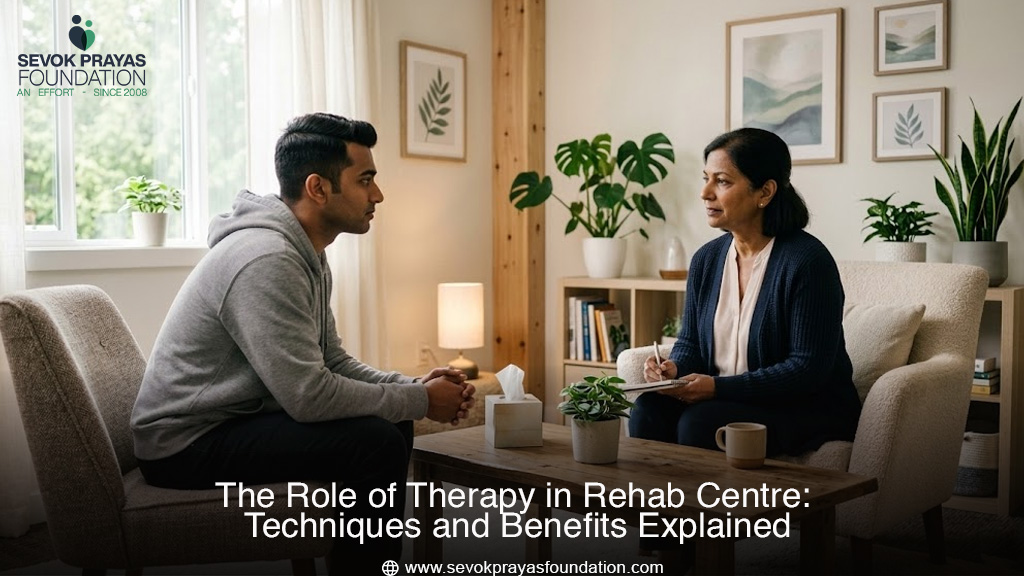
Private Counselling
Some conversations won’t happen with others around. Just won’t. If there is any traumatised childhood stuff, ugly relationships or any shame carried for decades there is a need for counseling. Individual sessions create space for those discussions. No audience. Complete confidentiality. Counsellors help spot patterns you can’t see yourself.
Cognitive Behavioral Therapy
CBT examines connections between thoughts, feelings and actions. Someone gets criticized at work. The brain jumps to “I’m worthless.” Overwhelm follows and then there is an urge to reach for alcohol. CBT teaches catching those patterns early. Challenging them. Building healthier responses. Research backing this for addiction recovery is solid.
Group Sessions
Different energy than one-on-one work. Addiction convinces people nobody understands. That loneliness keeps folks stuck. Group therapy at our drug rehabilitation centre in Siliguri dissolves isolation fast. Someone describes exactly what you’ve been feeling. Suddenly you’re not uniquely broken. Groups create accountability too—members call out excuses when they hear them.
12-Step Framework
AA and NA helped millions globally. Framework involves admitting powerlessness, making amends, building community support. Not everyone connects with spiritual elements. Fine. We use these principles flexibly.
What Proper Therapy Accomplishes
- Finds Root Causes: Why did this develop? What void was being filled? Knowing your personal “why” changes everything about recovery.
- Builds Emotional Regulation: Learning to feel anger, sadness, anxiety without immediately reaching for something—that’s the goal. Our alcohol rehab centre teaches sitting with discomfort until it becomes manageable. Then normal.
- Repairs Relationships: Addiction wrecks trust everywhere. Family. Friends. Partners. Treatment includes preparing for hard conversations. Making genuine amends.
- Creates Relapse Prevention: Sobriety inside treatment walls guarantees nothing outside. We build personalized plans at this addiction treatment centre. Your specific triggers. Your high-risk situations. Who you’ll call at difficult moments.
- Addresses Mental Health: Anxiety. PTSD. These often exist alongside substance use.
- Mental health rehabilitation in Siliguri requires treating everything together.
Why Residential Treatment Works
Can’t half-commit while managing normal life.
Inpatient rehab centre settings remove distractions. No work stress. No enabling friends. No access to substances. Our recovery centre in Siliguri provides that immersion. Twenty-five beds. Manageable size.
Structure matters too. Some factors that contribute to therapy treatment are waking up on time, good meals, sessions and rest. Feels restrictive initially, then feels safe. Detoxification centre services require medical oversight anyway. Withdrawal from alcohol especially turns dangerous without supervision. Having staff available continuously matters during crisis moments.
The Sevok Prayas Foundation Approach
Methods refined since 2008 based on observed results. Not theory.
People arrive from across India. Nepal. Bhutan. Bangladesh. Both AC and non-AC accommodations available. Recreation fills non-therapy hours. But amenities aren’t why people choose this rehabilitation hospital. They choose because recovery actually happens here.
Frequently Asked Questions FAQs
Q1. What addictions does therapy address?
Q2. How long are sessions?
Q3. Is everything confidential?
Q4. Can family participate?
Q5. Does therapy help severe cases?
Q6. How quickly do people see results?
Conclusion
Here’s what seventeen years running a rehab centre comes down to.
Detox clears your system. Therapy clears what drove you there. Skip the second part and you’re back where you started—we’ve watched it happen too many times to count.
Recovery isn’t about willpower. Not about shame either. It’s about understanding your triggers, processing old wounds, learning to feel without numbing.
That work isn’t easy. Nobody said it would be. But it’s possible. We’ve seen it hundreds of times since 2008.
Your next step? Pick up the phone. Ask questions. Visit if you can. Recovery starts the moment you decide you’re ready for something different.
Sevok Prayas Foundation Rehabilitation Centre in Siliguri Since 2008 sevokprayasfoundation.com