

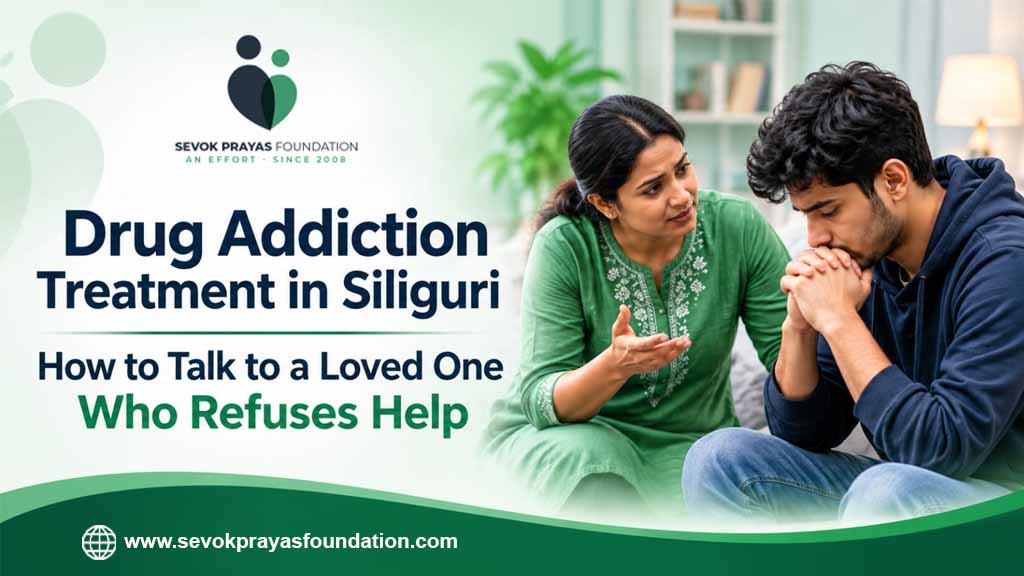
You have noticed the changes. The late nights, the missing money, the mood swings, the broken promises. You have raised it before, and each time it ended in anger, denial or silence. Now you are wondering whether anything will work.
Many families in Siliguri face this exact situation. This guide explains why people refuse help, how to talk to them in a way that has a real chance of being heard, what to avoid, and when to look for professional drug addiction treatment in Siliguri or alcohol addiction treatment in Siliguri. It also covers how to look after yourself, because families need support too.
Why Do People Refuse Help for Addiction?
Refusal is rarely stubbornness alone. It often comes from one or more of these:
- Denial: “I can control it. I’m not like those people.”
- Shame and fear of judgment: Admitting a problem feels like admitting failure, especially with family or community watching.
- Fear of withdrawal: Many people have tried to stop before and found it painful.
- Fear of losing the substance: For someone who is dependent, alcohol or drugs can feel like the only way to cope with stress, pain or emotions.
- Not seeing the damage: Addiction affects judgment, so a person may genuinely underestimate the harm.
- Past bad experiences: Previous attempts, harsh treatment or broken trust may have left them hopeless.
- Fear of consequences: Worries about job, reputation, legal trouble or what the family will say.
Understanding the reason helps you respond with strategy instead of frustration. Addiction is a health condition that changes how the brain handles motivation and decisions. A person who refuses help is not necessarily choosing to hurt you.
Before You Talk: Prepare Yourself
Learn about addiction
Read about the substance involved, withdrawal risks and treatment options. Knowing the basics helps you stay calm and credible.
Agree as a family
Decide who will speak, what you will say and what support you can honestly offer. Mixed messages, with one person shouting and another making excuses, make it easier for the person to dismiss everyone.
Choose the right time and place
- Pick a calm moment when the person is sober and not exhausted.
- Choose a private place, not a family gathering.
- Avoid talking during or just after a fight, or while they are intoxicated.
Decide what you will offer
Have concrete options ready: a visit to a doctor, a counselling session, a conversation with a rehabilitation centre in Siliguri, or a first call with a professional on their behalf.
Manage your own expectations
One conversation rarely changes everything. Your goal for the first talk is not to win an argument but to open the door.
How to Start the Conversation
1. Lead with care, not blame
Say: “I’m worried about you, and I care about you.”
Avoid: “You’ve destroyed this family.”
2. Use “I” statements and specific examples
Say: “I felt scared when you didn’t come home last night.”
Avoid: “You’re always drunk and useless.”
Specific, recent observations are harder to deny than general accusations.
3. Listen more than you speak
Ask open questions such as “How have you been feeling lately?” or “What worries you about cutting down?” Let them finish. People are more open when they feel heard.
4. Acknowledge their feelings
Say: “I understand it feels hard to talk about this.” You do not have to agree with their excuses, but acknowledging feelings lowers defensiveness.
5. Avoid labels
Words like “addict,” “drunkard” or “junkie” can trigger shame and shut the conversation down. Describe behaviour and its effects instead.
6. Offer a small, specific next step
“Will you come with me to speak to a doctor?” is easier to accept than “You must go to rehab right now.” A small step can lead to bigger ones.
7. Leave the door open
If they say no, respond calmly: “I’m not going to push you right now, but my offer stands whenever you’re ready.” Then follow through on staying supportive.
What to Say When They Respond With
“I don’t have a problem.”
Stay calm and share one or two specific facts without arguing: “I’ve noticed you’ve missed work three times this month and you seemed unwell. I’m worried.”
“I can stop whenever I want.”
You might say: “I hope that’s true. Would you be willing to try stopping for a few weeks and see how it feels?” Struggling during that attempt can show them, in their own experience, how strong the dependence is. If it involves alcohol or certain drugs, advise medical guidance before stopping suddenly (see the safety note below).
“Everyone does it.”
“Maybe, but I’m worried about what it’s doing to you in particular.”
“Leave me alone.”
Don’t escalate. “Okay, I’ll give you space. I’m here when you want to talk.” Try again another day.
“It’s your fault I drink or use.”
Don’t take the bait. “I hear that you’re feeling a lot of stress. I’d like us to talk to someone who can help us both.”
What to Avoid
- Threats you won’t keep – Empty ultimatums teach the person that your words have no weight.
- Shouting, shaming or humiliating them in front of others.
- Searching for a “quick trick” such as secretly mixing substances into food or drinks. This can be dangerous and destroys trust.
- Locking them up or using force at home – It can cause harm and does not treat addiction.
- Covering up for them – Making excuses to employers, relatives or neighbours may shield them from the consequences that could motivate change.
- Giving money that may fund substance use. Offer to pay bills directly or provide food and essentials instead.
- Expecting a promise to fix it – Promises made under pressure are easily broken.
- Blaming yourself – You did not cause the addiction and you cannot control it, but you can influence the environment around it.
Safety Note: Do Not Force a Sudden Stop
Stopping alcohol suddenly after long-term heavy drinking can cause seizures, severe confusion and other medical emergencies. Some other substances, such as sedatives, also carry withdrawal risks. Detox should be done under medical supervision. If your loved one agrees to stop, take them to a doctor or a qualified rehabilitation facility.
When Family Approaches Work Better: Staying Involved Without Controlling
Research and clinical experience suggest that supportive, structured approaches often do better than confrontation. These include:
- Motivational approaches: Exploring the person’s own reasons for change, instead of imposing yours.
- Family-based programmes: Training family members to reinforce healthy choices and respond calmly to substance use.
- Natural consequences with compassion: Letting the person experience the results of their choices, such as missed events or lost privileges, while making it clear that you love them and will help when they are ready.
A qualified counsellor or addiction specialist can guide your family on which approach suits your situation. Sevok Prayas offers family counselling for exactly this reason.
Understanding Where They Are: Readiness for Change
People move through stages, and knowing the stage helps you choose your approach:
- Not thinking about change yet – Focus on staying connected and planting small seeds of concern.
- Thinking about it, but unsure – Help them weigh pros and cons, and share information.
- Preparing to act – Offer practical help, such as booking an assessment.
- Taking action – Support treatment and a healthy routine.
- Maintaining recovery – Encourage aftercare, relapse prevention and family involvement.
Pushing someone in stage one to act as though they are in stage four usually backfires.
When to Seek Professional Help for Your Loved One
Consider professional addiction treatment when:
- They cannot stop despite repeated attempts.
- Withdrawal symptoms occur.
- Use is damaging health, work, finances or relationships.
- They are used in risky situations, such as driving under the influence.
- There are signs of depression, anxiety or other mental health concerns.
- Home efforts have not worked.
An assessment by a doctor or counsellor can clarify what level of care is appropriate, whether outpatient counselling, medically supervised detox or residential rehabilitation.
When It’s an Emergency
Seek immediate medical help, by going to the nearest hospital or calling emergency services (112 in India), if the person has:
- Seizures or fits.
- Severe confusion, hallucinations or extreme agitation.
- Difficulty breathing, chest pain or loss of consciousness.
- Signs of overdose.
- Talk of suicide or self-harm, or threats to harm others.
If you are worried about your loved one’s mental state or your own, Tele-MANAS, India’s government mental health helpline (14416), can offer support. Please verify current helpline details before relying on them.
What a Rehabilitation Centre in Siliguri Can Offer
A good rehabilitation centre in Siliguri gives structure that is hard to build at home:
- Assessment of substance use, physical health and mental well-being
- Medically supervised detox for safe withdrawal management
- Individual and group counselling that addresses triggers, thinking patterns and emotions
- Treatment of co-occurring conditions like anxiety or depression
- Relapse prevention skills and daily routine building
- Family counselling and education
- Aftercare planning to support recovery beyond the centre
Choose a centre with qualified professionals, clear information about treatment and fees, respect for dignity and confidentiality, and family involvement. Avoid any facility that promises guaranteed cures, uses force or abuse, or is unclear about how it operates.
Taking Care of Yourself
Living with someone’s addiction is exhausting. You may feel anger, guilt, fear and grief at the same time. Protect your own well-being:
- Talk to a counsellor, a trusted friend or a support group for families.
- Keep up your routine, sleep, food and health checks.
- Set clear boundaries, such as not lending money, not lying for them and not tolerating violence or abuse.
- Remember that you are not responsible for their choices.
- Ensure children in the home are safe and supported.
If there is violence or you feel unsafe, prioritise your safety and contact local authorities or a trusted support service.
How Sevok Prayas Can Help Your Family
Sevok Prayas supports individuals and families in Siliguri facing alcohol and drug dependence. You do not need your loved one’s agreement to take the first step. You can start by speaking to us:
- Confidential discussion of your situation.
- Guidance on how to approach and motivate a reluctant family member.
- Assessment and treatment planning, including drug and alcohol treatment options.
- Family counselling and education.
- Aftercare and relapse-prevention support.
Frequently Asked Questions (FAQs)
Q1. What should I do if my family member refuses addiction treatment?
Q2. Can someone be admitted to a rehabilitation centre against their will?
Q3. How do I convince someone to go to a rehabilitation centre in Siliguri?
Q4. Why does my loved one deny having an addiction?
Q5. Should I give them an ultimatum?
Q6. Is it safe to stop drinking alcohol at home?
Q7. What if they relapse after treatment?
Q8. Can families get help even if the person won’t come?
Q9. How long does addiction treatment take?
Q10. How do I contact Sevok Prayas?
Final Words
When someone you love refuses help, it can feel like nothing will ever change. But many people do come around, often after repeated conversations in which they feel cared for instead of attacked. Stay patient, stay consistent, protect your own health, and keep the door open.
You do not have to handle this alone. Whether you need advice on talking to your loved one or you are ready to explore drug addiction treatment in Siliguri, alcohol addiction treatment in Siliguri or a rehabilitation centre in Siliguri, support is available.
Worried about someone you love?
Contact Sevok Prayas for a confidential, judgment-free conversation.